Career exploration for K-12, colleges, and youth programs
Students can’t choose a career they’ve never seen.
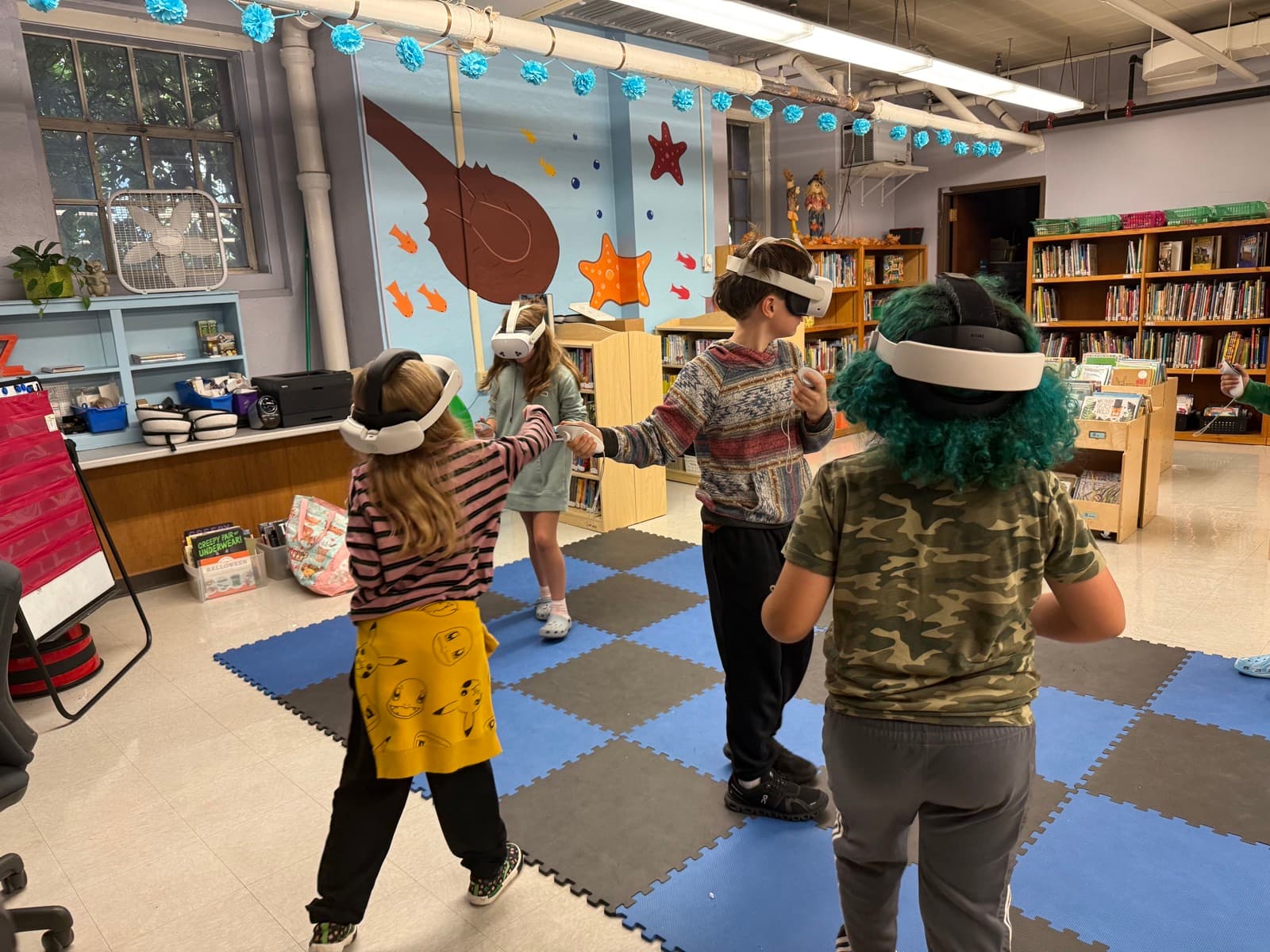
Help learners discover what a job involves through VR, hands-on activities, and guided reflection. We bring the equipment and lead the experience.
You bring the learners and the space. We help them find something worth exploring.
- 12% → 50%
- Interest in a career, before and after one session
- Grade 4+
- From fourth grade through adult learners
- 20+
- Careers to choose from, with more each term
- 500+
- Students served across Rhode Island
Who we support
From fourth grade to community college
Choose the careers, age group, and setting. We adapt the experience for your learners.
K-12 schools and districts
Bring career discovery into a class period, career day, or ongoing program. We guide the experience and match the discussion to your students.
Colleges and adult learners
Help learners explore a field before choosing a course or pathway. Make the tools, work environments, and day-to-day decisions easier to picture.
Nonprofits and youth programs
After-school, summer, and mentorship programs. Plug into your existing curriculum or co-design a focus track for the community you serve.
Real VR footage
See what students actually experience
Footage from inside the headset. These are simulations we design and build ourselves.
Nurse
Take vitals, triage, and care for patients under pressure.
Electrician
Explore a virtual panel and find an electrical fault.
Excavator operator
Try the controls and tasks of an excavator operator.
The catalog
Careers a student can step into
One focused experience per session, so students get depth instead of a tour.
Pilot
Run pre-flight checks and take off from the cockpit
Nurse
Take vitals, triage, and care for patients under pressure
Electrician
Explore a virtual panel and find a fault
Chef
Prep, plate, and run the line during a kitchen rush
Veterinarian
Diagnose and treat animal patients hands-on
Excavator operator
Try digging, loading, and grading in a simulation
Drone operator
Plan a flight path and explore a survey mission
Welder
Explore the tools and techniques behind a weld
Explore more careers across healthcare, the trades, transportation, and ocean industries.
Built by level
The right depth for every age
Same careers, four levels of depth. You tell us the grade band and we bring the right one.
Explorer
Grades 4 to 5
Spark curiosity and break down career myths.
Investigator
Grades 6 to 7
Understand what careers actually ask of you.
Builder
Grades 8 to 9
Career pathways and what it takes to walk one.
Practitioner
Grades 10 to 12 and college
Real pathway planning and life after graduation.
How a session runs
We handle the setup. You see the discovery.
A Bubbler facilitator sets up the equipment, guides the group, and leads the reflection. We plan the format around your learners and schedule.
- Part 1
Meet the career
A short introduction connects the work to a realistic job mission and invites curiosity.
- Part 2
Step into VR
Learners take turns trying the career while a facilitator guides the experience and the group follows along.
- Part 3
Explore together
Hands-on activities, Sim Lab challenges, or group discussion help learners make sense of what they tried.
- Part 4
Reflect and connect
Learners share what interested them and consider which careers or pathways they want to explore next.
Featured focus area
Blue Tech career exploration
Rhode Island sits at the heart of the ocean economy. These sessions show students the Blue Tech careers growing in their own backyard.
Marine science and research
Ocean ecosystems, fieldwork, and environmental monitoring careers.
Maritime and shipbuilding
Naval architecture, shipyard operations, and commercial maritime work.
Offshore renewable energy
Offshore wind, tidal energy, and sustainable ocean infrastructure.
Underwater technology
ROV operations, underwater welding, and subsea engineering.
Aquaculture and fisheries
Sustainable seafood production, fisheries management, and ocean farming.
Ocean defense and operations
Naval defense technology, drone operations, and coastal protection.
After the experience
Turn interest into a next step.
See who participated, which careers they explored, and what caught their attention. Use those reflections to guide conversations about courses, pathways, and future experiences.
The Bubbler Hub helps educators keep groups, activities, and student reflections together.
Hands-on career discovery
Career discovery starts with a decision.
Choose parts for an underwater robot or plan an offshore wind farm. These browser activities give learners another way to explore how work gets done.
Help your learners find a new possibility.
Tell us your age group, schedule, and careers of interest. We’ll help you plan a guided experience for your learners.