Skip to content
Bubbler Reality Labs

IndustriesManufacturing

Manufacturing

Train on the line without stopping the line.

New hires and cross-trained operators rehearse startups, changeovers, lockout/tagout, and fault response in VR first. Supervisors see every step that was taken or missed before anyone touches a running machine.

For plant managers, EHS leads, maintenance supervisors, apprenticeship programs, and community colleges.

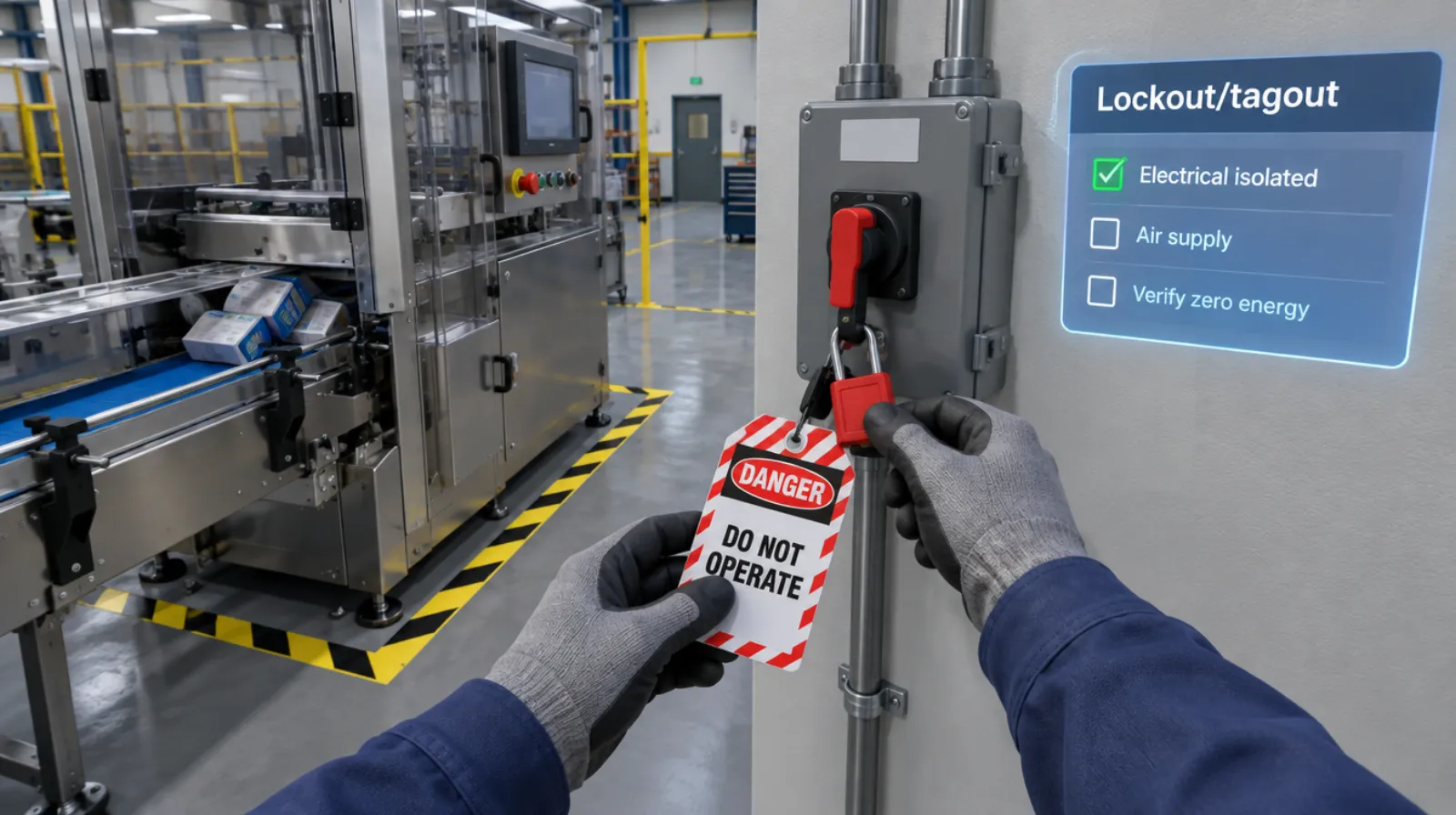
In-headset view of the Lockout/tagout module

In the headset: Lockout/tagout

Training today

  • Every practice run costs production time

    Training on a working machine means taking it out of service, slowing the line, or having a new hire learn while product is running.

  • Shadowing depends on who you shadow

    Two new operators trained by two different people learn two different versions of the procedure.

  • The dangerous steps are the ones you can’t stage

    Stored energy, a jam during a changeover, or a guard left open are hard to practice safely on the floor.

With VR practice

  • Practice off the line

    Every repeat happens on a model of the machine, so production keeps running.

  • One version of the procedure

    Every operator practices the same sequence your engineers signed off on.

  • Rehearse the dangerous steps safely

    Stored energy, jams, and open guards can be practiced without anyone getting hurt.

This is for

  • Plant and operations managers
  • EHS and safety managers
  • Maintenance supervisors
  • Training coordinators and apprenticeship sponsors

More scenarios

Practice for the floor, maintenance, and the training pipeline.

Operations and EHS

Operators, line leads, safety managers

Consistent practice on the procedures that cause injuries and downtime when they go wrong.

  • Lockout/tagout on a machine with more than one energy source
  • Pre-start checks and machine startup
  • Forklift and pedestrian traffic awareness
  • Responding to a jam or alarm
  • New-hire orientation to the line and its hazards

Maintenance and quality

Technicians, mechanics, QC inspectors

Rehearse the sequences that happen rarely but have to be done right.

  • Changeover and setup sequences
  • Troubleshooting a fault from the symptoms
  • Spotting defects during inspection
  • Confined space entry checks

Apprenticeships and colleges

Training providers and workforce programs

Students arrive at an employer already familiar with the equipment and the order of work.

  • Equipment familiarization before a site visit
  • Assigned practice students repeat until ready
  • Instructor review of each attempt

A scenario, step by step

Lockout/tagout before clearing a jam

A packaging machine has stopped with product jammed in the infeed. The operator needs to clear it.

  1. Identify energy sources

    Find the electrical disconnect, the air supply, and anything still under pressure or tension.

  2. Isolate

    Notify the area, shut the machine down, and isolate each energy source.

  3. Lock, tag, and verify

    Apply a personal lock and tag, bleed stored energy, and try to start the machine to prove zero energy.

  4. Clear and restore

    Clear the jam, check the area, remove locks in order, and tell the line lead it is back.

Afterward: The supervisor sees whether every energy source was isolated, whether zero energy was verified, and the order of each step.

Analytics and reports

From one person in a headset to your whole program.

Every action, decision, and word in a module is captured, analyzed against your standard, and reported in the Bubbler Hub. Supervisors see it at five levels.

  1. 01

    Live view

    Watch what the learner sees in the headset from a laptop or tablet, with the current task, step, and progress. The video stream isn’t stored; the session record is.

  2. 02

    Session record

    Every step taken or missed, in order and timed, plus the decisions the learner made and what they said.

  3. 03

    Learner history

    Every attempt for each person, so you can see what improved and what still needs another run.

  4. 04

    Program dashboard

    Completion across the group, the steps most people miss, and who needs another attempt or a conversation.

  5. 05

    Reports and exports

    Dated completion reports for each person, as PDF or data files, for training files, audits, and accreditation.

What is recorded on an equipment procedure.

Sequence
Every step of your procedure, in the order the operator did it.
Missed checks
Safety and quality checks that were skipped or done late.
Fault response
How long it took to recognize the problem and what the operator did next.
Stop-work decisions
Whether the operator stopped when the procedure says to stop.
Completion
Dated completion for each person and procedure, for training files and audits.

LOTO and startup, second shift

Sample plant, fictional data

Sample
Operators enrolled
38
2 lines
Cleared to shadow
29
9 still practicing
Average attempts
1.8
per procedure
Machine hours used
0
practice ran in VR

Most-missed steps, share of the group

  • Bled residual air pressure34%
  • Tried to start the machine to verify zero energy26%
  • Notified the area before shutdown18%
  • Removed locks in the correct order9%
PersonScenarioAttemptsNext step
D. MorenoCompleteLOTO, infeed jam2None
K. PatelPracticingLine 2 startup3Pre-start guard check
S. NguyenCompleteChangeover1None
R. BaptisteNot startedLOTO, infeed jam0Assign before Monday
Sample program view. Names and numbers are made up to show the layout.

Questions

Before you book a call.

VR practice prepares operators for supervised work on the real equipment. Your authorization process and OSHA-required training stay in place.

Yes. We build from photos, drawings, manuals, and a walkthrough with your team. Your subject-matter expert reviews the procedure before rollout.

Which procedure costs you the most when it goes wrong?

Start with that one. We’ll scope a first deployment around your equipment and your procedure.

VR trainingBook a call