Skip to content
Bubbler Reality Labs

IndustriesPharmaceutical

Pharmaceutical and life sciences

Practice cleanroom work before anyone enters the cleanroom.

Gowning, aseptic technique, line clearance, and deviation reporting are easy to get slightly wrong and expensive when you do. Staff rehearse them in VR until the sequence is automatic, without using gowns, materials, or cleanroom time.

For biomanufacturing sites, pharmaceutical manufacturers, QA and training teams, and life science programs.

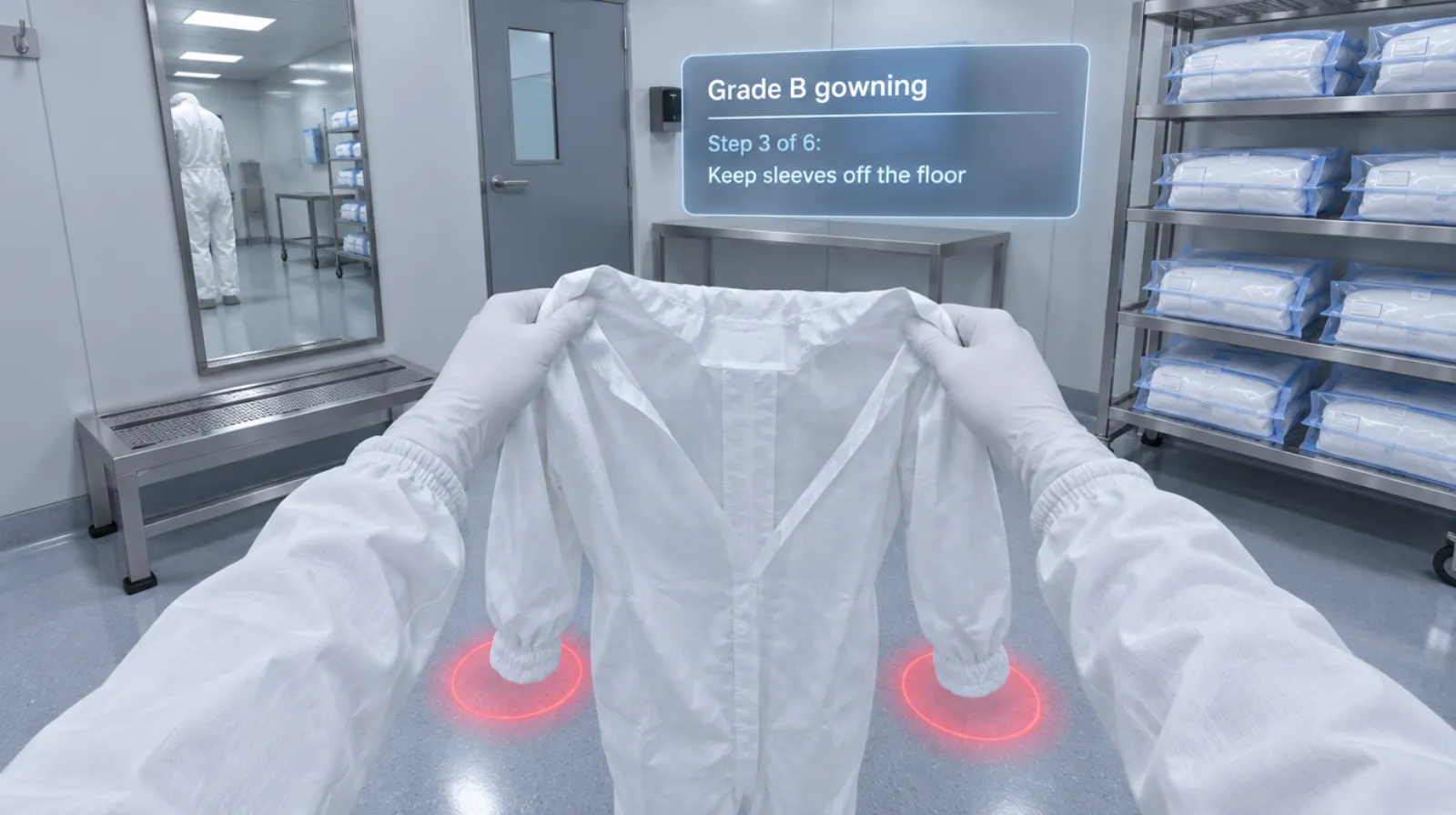
In-headset view of the Aseptic gowning module

In the headset: Aseptic gowning

Training today

  • Cleanroom time is scarce

    Every training entry uses gowns, adds people to a controlled space, and competes with production.

  • Small mistakes are invisible to the trainee

    Touching the outside of a glove or a sleeve at the wrong moment doesn’t look like a mistake until environmental monitoring finds it.

  • Reading an SOP isn’t doing it

    Staff sign that they read a procedure. That doesn’t show they can carry it out under time pressure.

With VR practice

  • Gowning practice without the gowns

    Trainees repeat the sequence as often as they need before a single live entry.

  • Contamination you can see

    Every touch of an outer surface is flagged the moment it happens, so trainees learn what a mistake looks like.

  • Doing, not signing

    Staff carry out the SOP step by step, and you see where they deviate.

This is for

  • QA and training managers
  • Manufacturing and site leadership
  • Technical and validation teams
  • Life science program instructors

More scenarios

Practice for manufacturing, quality, and the people training to join them.

Manufacturing

Operators, technicians, new hires

Rehearse the procedures where a small error costs a batch.

  • Aseptic gowning and entering through the airlock
  • Cleanroom movement and contamination control
  • Equipment setup following the SOP
  • Line clearance between batches
  • Spill response

Quality

QA, QC, and training coordinators

See where people actually deviate from the procedure, not just whether they signed for it.

  • Recognizing a deviation and reporting it
  • Good documentation practice on a batch record
  • Environmental monitoring and sampling

Life science training programs

Colleges and workforce programs

Students learn cleanroom behavior before their first site visit or internship.

  • Introduction to the cleanroom and its rules
  • Gowning practice students repeat until ready
  • Instructor review of each attempt

A scenario, step by step

Gowning for a Grade B area

A new technician is entering the cleanroom for a filling operation.

  1. Prepare

    Remove jewelry, wash and sanitize hands, and check gown sizes and expiry.

  2. Gown in order

    Hood, coverall, and boot covers in sequence, without the outside touching the floor or bare skin.

  3. Gloves and check

    Put on sterile gloves, inspect them, and check the full gown in the mirror.

  4. Enter

    Sanitize gloves and move through the airlock following the door sequence.

Afterward: The trainer sees the order of each garment, every contact with an outer surface, and any skipped check.

Analytics and reports

From one person in a headset to your whole program.

Every action, decision, and word in a module is captured, analyzed against your standard, and reported in the Bubbler Hub. Supervisors see it at five levels.

  1. 01

    Live view

    Watch what the learner sees in the headset from a laptop or tablet, with the current task, step, and progress. The video stream isn’t stored; the session record is.

  2. 02

    Session record

    Every step taken or missed, in order and timed, plus the decisions the learner made and what they said.

  3. 03

    Learner history

    Every attempt for each person, so you can see what improved and what still needs another run.

  4. 04

    Program dashboard

    Completion across the group, the steps most people miss, and who needs another attempt or a conversation.

  5. 05

    Reports and exports

    Dated completion reports for each person, as PDF or data files, for training files, audits, and accreditation.

What is recorded on a GMP procedure.

Sequence
Each step of the SOP, in the order it was done.
Contamination events
Contact with an outer surface, the floor, or bare skin, and when it happened.
Deviations
Whether the trainee noticed a problem, stopped, and reported it correctly.
Documentation
Entries made on the simulated batch record and any errors in them.
Completion
Dated completion for each person and SOP, exportable for training files.

Aseptic gowning, new hires

Sample site, fictional data

Sample
Trainees enrolled
16
2 cohorts
Ready for live qualification
11
5 still practicing
Average attempts
3.1
per trainee
Gowns used in practice
0
practice ran in VR

Most-missed steps, share of the group

  • Coverall sleeve touched the floor38%
  • Inspected gloves before entry25%
  • Sanitized gloves at the airlock19%
  • Checked gown expiry13%
PersonScenarioAttemptsNext step
L. FernandesCompleteGrade B gowning4Schedule live qualification
P. MensahPracticingGrade B gowning2Sleeve handling
H. KimCompleteLine clearance1None
E. RossiNot startedDeviation reporting0Assign this week
Sample program view. Names and numbers are made up to show the layout.

Questions

Before you book a call.

VR practice is a training tool. It is not a validated GMP system and does not replace gowning qualification, media fills, or your quality system’s training records.

Yes. We build from your SOPs and room layout, and your QA or training lead reviews the scenario before rollout.

Start with the procedure that fails qualification most.

Send us the SOP. We’ll show you how it would run in VR and what your trainers would see afterward.

VR trainingBook a call