Sales and soft skills practice with characters who talk back.
Your people practice real conversations out loud: a buyer pushing back on price, an upset customer, a hard talk with an employee, a product launch. The character responds to what they actually say, and the platform records the full transcript, scores the key moments, and shows managers exactly where the conversation turned.
We build the characters and scenarios from your playbooks, product sheets, policies, and real calls. Learners read a short brief on the situation before they start.
02
Practice
Learners talk out loud with a buyer, customer, or employee who responds to what they say. They can repeat the conversation and try a different approach.
03
Review
Each conversation is saved as a transcript with its key moments. Managers coach the specific moment that went well or badly, and see progress across the team.
Across industries
The same practice, in any industry.
Banking and insurance
Onboarding relationship managers
Explaining products and fees clearly
Handling complaints in a branch
Retail and hospitality
Helping a customer choose
Handling returns and complaints
Front desk and guest recovery
Healthcare
Patient communication
Difficult family conversations
Front desk and scheduling calls
Pharma and medical devices
Product launch practice for sales reps
Talking with clinicians about a product
Handling questions within approved claims
Public sector
Calming an upset member of the public
Explaining eligibility and next steps
Phone and counter service
Higher education
Advising conversations
Front desk and enrollment calls
Workplace communication for new hires
More scenarios
Conversations for every team that talks to people.
Sales teams
Account executives, SDRs, new hires
Rehearse the conversations that move a deal forward, with your product and your pricing.
Handling price and timing objections
Running a discovery call
Negotiating terms
Asking for a clear next step
Product launches and new feature pitches
Customer-facing teams
Customer service, front desk, call centers, retail
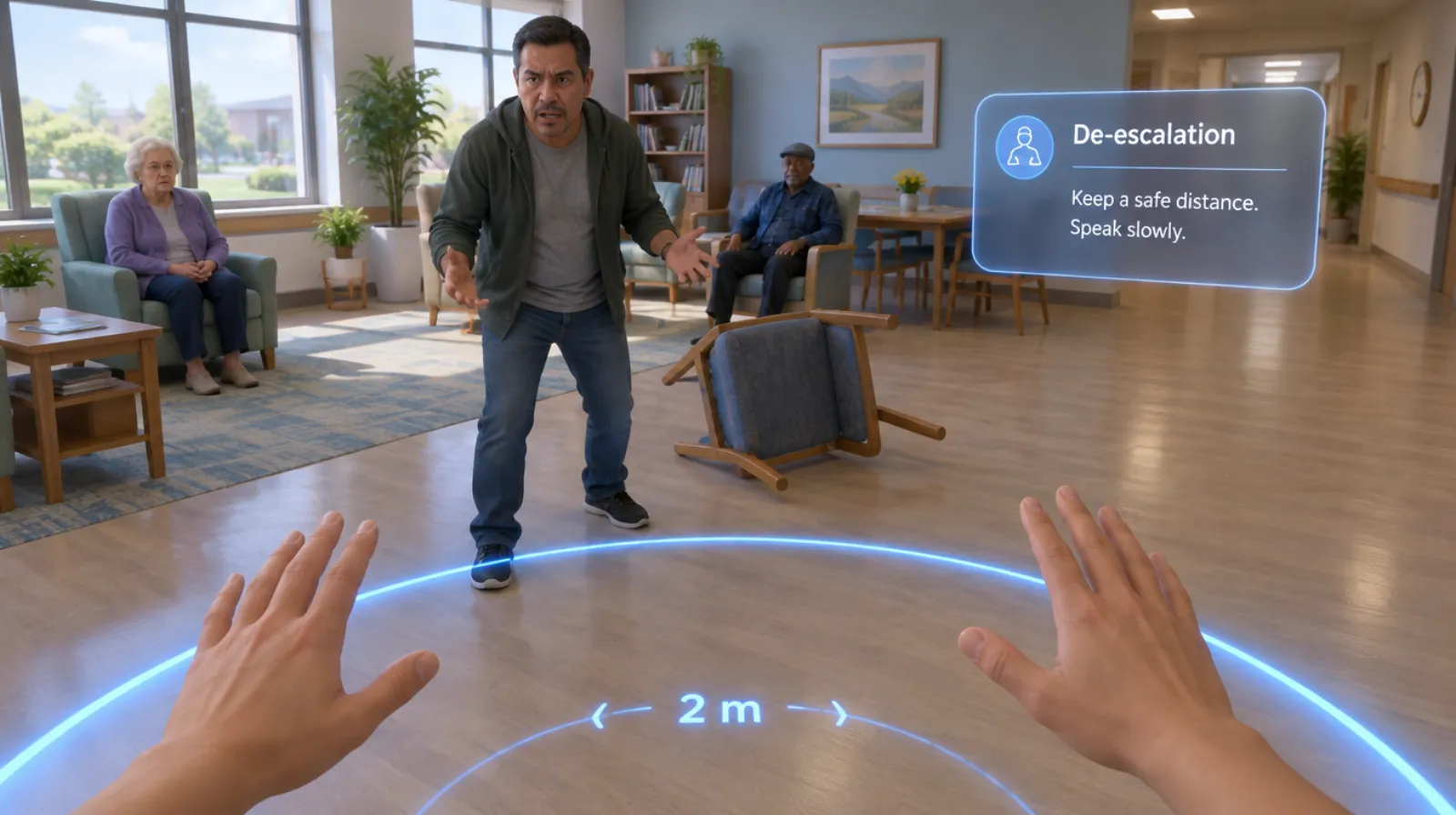
Practice staying calm and solving the problem when the customer is upset.
De-escalating an angry customer
Recovering after a service failure
Saying no while keeping the customer
Handing off to a supervisor
Managers and HR
New managers, team leads, HR partners
Practice the conversations people dread, from feedback to a performance review.
Giving difficult feedback
A performance conversation
Setting expectations with a new hire
Workplace communication for new hires
A scenario, step by step
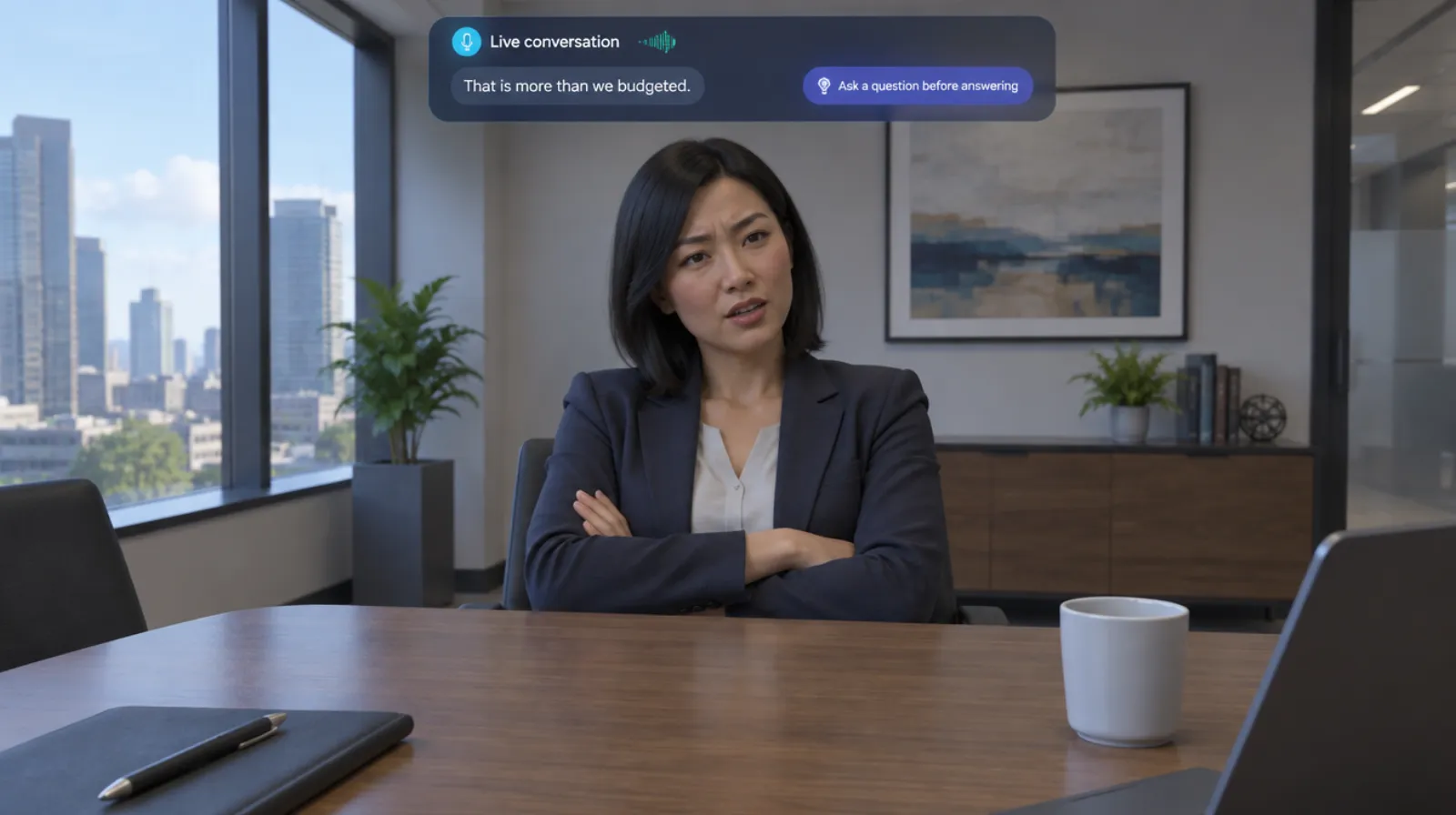
A buyer pushes back on price
Twenty minutes into a good call, the operations director says your proposal is more than they budgeted.
01
Hear it out
Let the buyer finish, and acknowledge the concern without rushing to discount.
02
Ask before answering
Find out what the budget is compared against and what is driving the concern.
03
Connect value to their problem
Tie the price to the cost of the problem they described earlier in the call.
04
Agree a next step
Leave with a specific next step, such as a call with their finance lead.
Afterward: The manager reads the transcript, sees whether the rep asked before answering, and hears how the buyer responded.
Analytics and reports
From one person in a headset to your whole program.
Every action, decision, and word in a module is captured, analyzed against your standard, and reported in the Bubbler Hub. Supervisors see it at five levels.
01
Live view
Watch what the learner sees in the headset from a laptop or tablet, with the current task, step, and progress. The video stream isn’t stored; the session record is.
02
Session record
Every step taken or missed, in order and timed, plus the decisions the learner made and what they said.
03
Learner history
Every attempt for each person, so you can see what improved and what still needs another run.
04
Program dashboard
Completion across the group, the steps most people miss, and who needs another attempt or a conversation.
05
Reports and exports
Dated completion reports for each person, as PDF or data files, for training files, audits, and accreditation.
What is recorded in a conversation.
Transcript
Everything the learner and the character said, in order.
Questions asked
How many open questions the learner asked, and when.
Key moments
Whether the learner acknowledged the concern, addressed it, and stayed on track.
Talk time
How much of the conversation each side spent talking.
Outcome
How the conversation ended, such as an agreed next step or a customer who left unhappy.
New rep onboarding, Q4
Sample team, fictional data
Sample
Reps enrolled
14
2 hiring classes
Ready for live calls
9
5 still practicing
Average attempts
3.6
per conversation
Next step agreed
61%
of final attempts
Most-missed moments, share of the group
Asked a question before answering the objection47%
Tied price to the buyer’s stated problem36%
Asked for a specific next step28%
Acknowledged the concern first14%
Person
Conversation
Attempts
Next step
K. LopesComplete
Price objection
4
Shadow live calls
D. AhmedPracticing
Discovery call
2
More open questions
R. WalshComplete
Price objection
3
None
A. MensahNot started
Negotiation
0
Assign this week
Sample program view. Names and numbers are made up to show the layout.
Questions
Before you book a call.
The characters respond to what learners say, but they are practice partners, not real customers. Records describe the practice conversation, not anyone’s job performance.
They talk out loud, the same way they would on a call or in a meeting. The character listens and answers.