Healthcare and nursingDementia care
VR training module
Dementia care practice for the moments a care plan can’t script.
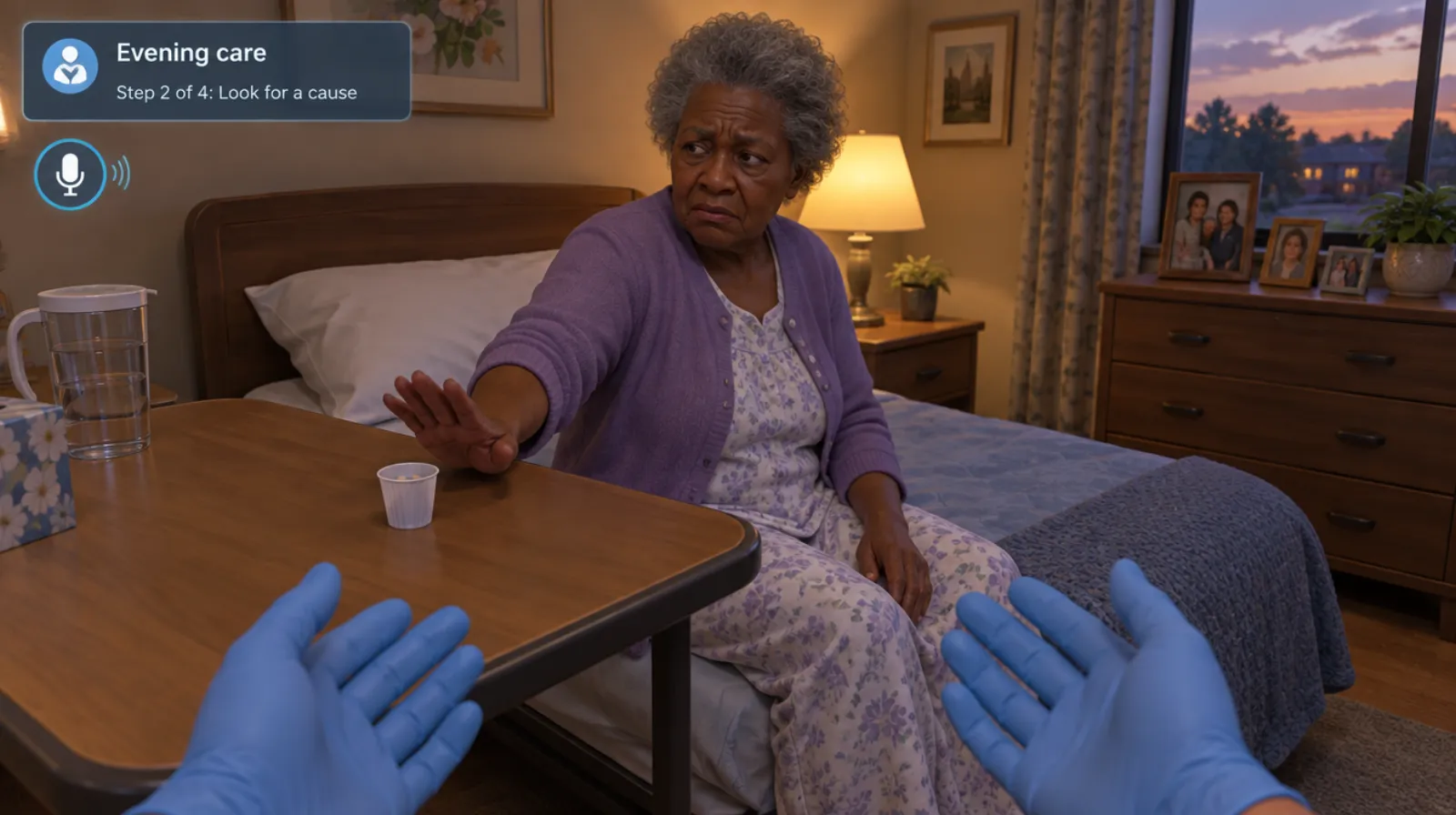
Staff work through agitation, care refusal, and late-day confusion with a resident who reacts to what they say and do. They learn to slow down, look for a cause, and redirect without force, then report what happened.
- Every action, decision, and word recorded and analyzed
- Runs on Meta Quest headsets, managed from the Bubbler Hub
- Adapted to your procedures before rollout
Signs you need this
Signs your training needs more practice
Care refusals turn into standoffs
Staff repeat the request louder or come back with more people, and the resident becomes more upset.
Evenings are the hardest shift
Late-day confusion and restlessness lead to incidents, call lights, and as-needed medication.
New aides learn on residents
The first time a new CNA meets a frightened resident is on a real shift, often alone.
Pain and needs go unnoticed
Behavior is treated as the problem instead of a sign of pain, hunger, or a need for the bathroom.
Refusals aren’t reported
The charge nurse finds out about a missed medication at the end of the shift, or not at all.
What the module includes
5 chapters, in the order the work happens.
Learners can run the whole module or repeat a single chapter until they have it.
- 01
Approach and introduction
Knock, introduce yourself, get to eye level, and read the room: the time of day, the noise, who else is there.
- 02
Look for a cause
Check for pain, fear, hunger, thirst, the bathroom, or an unfamiliar face before trying again.
- 03
Validation and redirection
Acknowledge what the resident says instead of correcting it, offer a choice, or redirect to something familiar.
- 04
Knowing when to step away
Leave safely, give the resident time, and come back or ask a colleague to try.
- 05
Report and document
Tell the charge nurse what happened and what you tried, and note it the way your facility requires.
What gets recorded
Every attempt, analyzed step by step.
- Approach
- Introduction, eye level, and permission before touching, in the order they happened.
- What was said
- Whether the learner validated, redirected, or argued, and how the resident responded.
- Causes checked
- Which possible causes the learner looked for before trying again.
- Report
- Whether the refusal was reported, to whom, and what the report included.
Built around your work
Your procedure, not a generic one.
- Your residents’ routines and your evening care schedule
- Your facility’s reporting chain and documentation
- The person-centered care approach your educators teach
- Scenarios matched to the behaviors your staff see most
Your subject-matter experts review the module before anyone trains on it.
- 01
Live view
Watch what the learner sees in the headset from a laptop or tablet, with the current task, step, and progress. The video stream isn’t stored; the session record is.
- 02
Session record
Every step taken or missed, in order and timed, plus the decisions the learner made and what they said.
- 03
Learner history
Every attempt for each person, so you can see what improved and what still needs another run.
- 04
Program dashboard
Completion across the group, the steps most people miss, and who needs another attempt or a conversation.
- 05
Reports and exports
Dated completion reports for each person, as PDF or data files, for training files, audits, and accreditation.
Not just another course
What changes when practice moves into a headset.
| Classroom or video | This module | |
|---|---|---|
| How people learn | Slides, video, or a demonstration | Doing each step themselves |
| Mistakes | Found later, on the job | Shown the moment they happen |
| Consistency | Depends on the trainer | Same scenario for everyone |
| Repetition | Limited by time, materials, and equipment | As many attempts as each person needs |
| Records | Sign-in sheet | Each step, decision, and attempt, by person |
Related modules
Often run together.
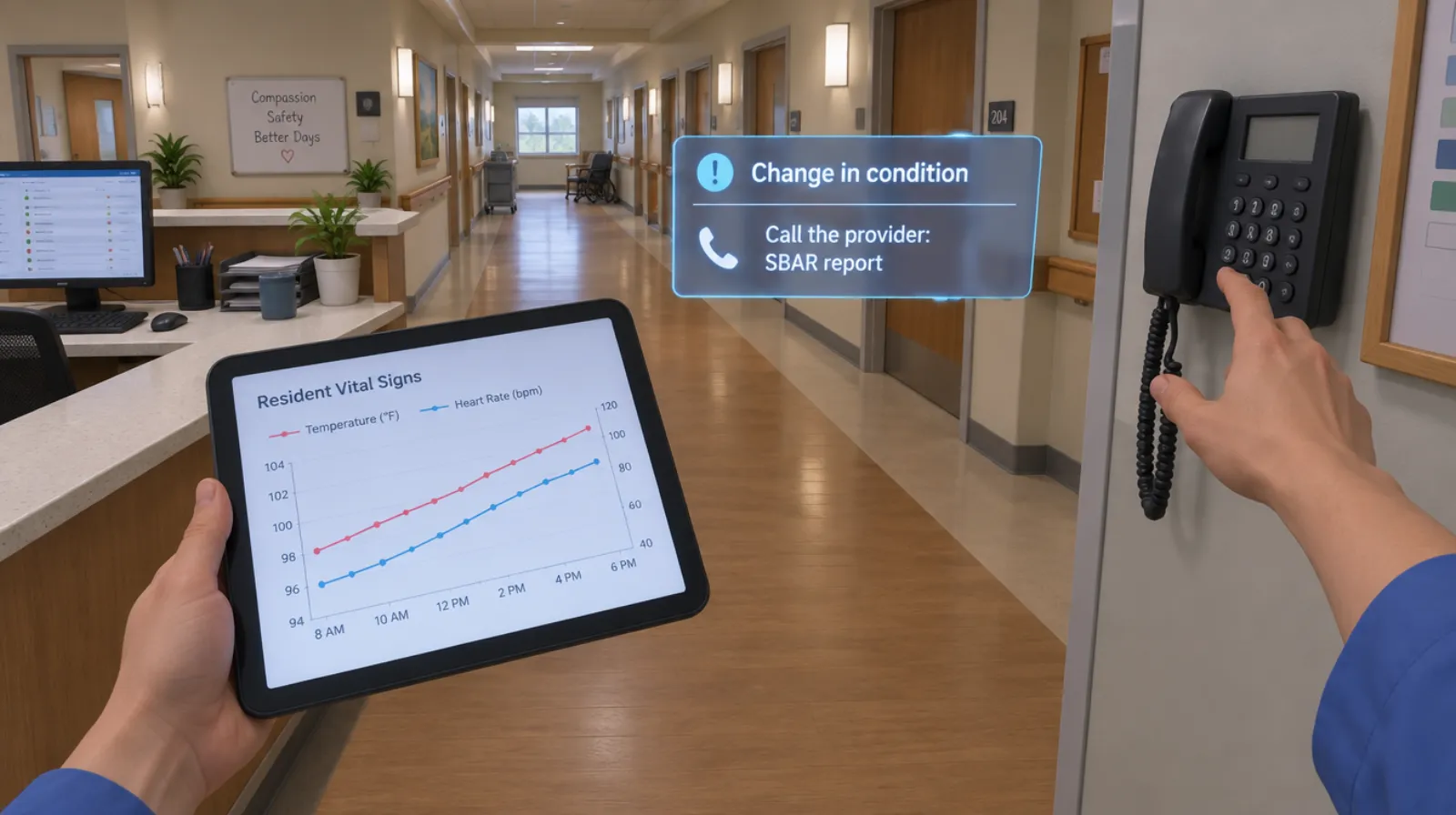
Change in condition and SBAR
Noticing that a resident or patient is different, and calling it in clearly.
Read more →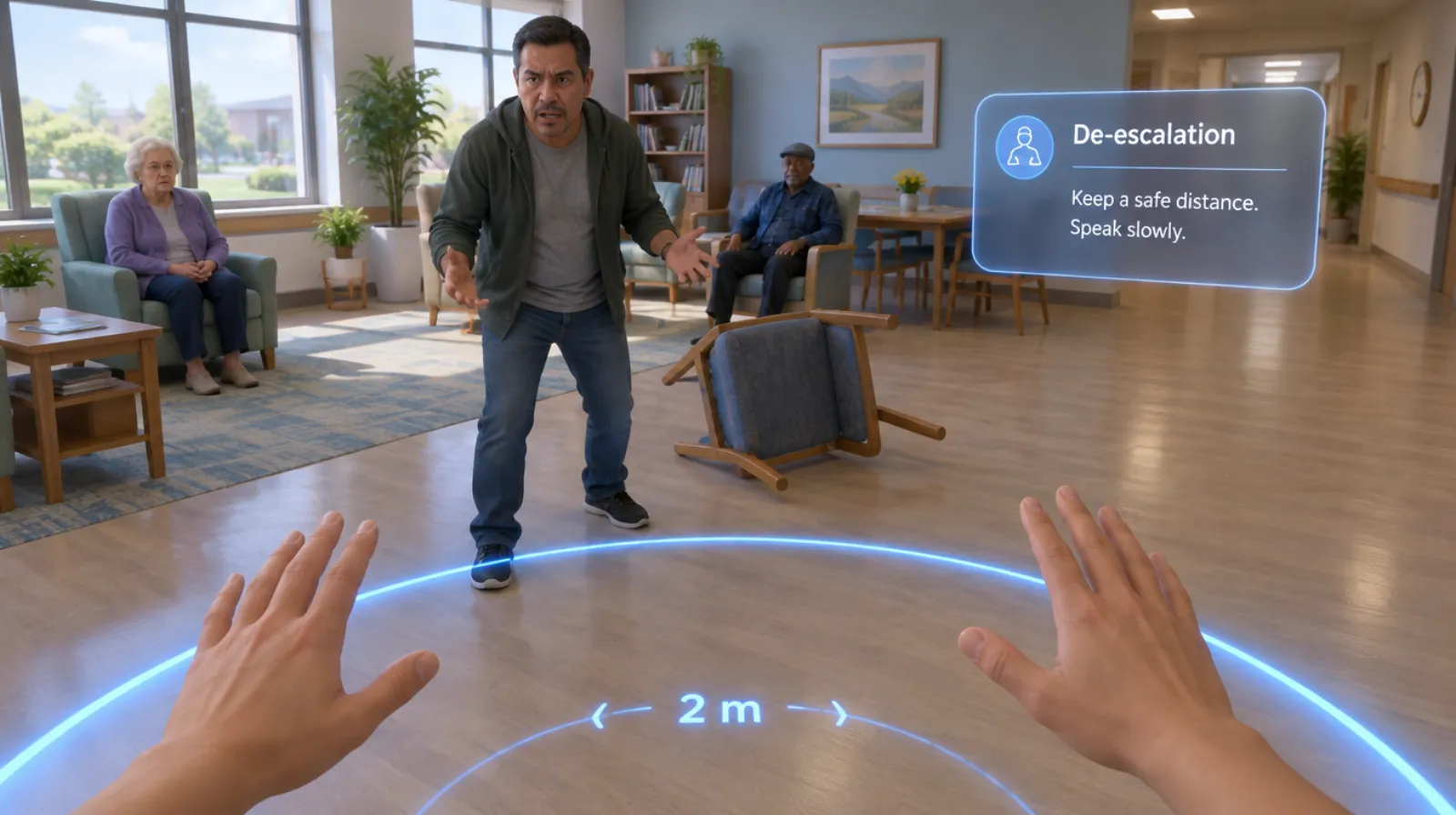
Behavioral health de-escalation
Keeping yourself and others safe when someone is in crisis.
Read more →Exit-seeking and missing residents
5 chapters
Exit-seeking and missing residents
Responding to a resident trying to leave, and to a resident who is missing.
Read more →Questions
About this module.
Each step taken or skipped, what the learner said to the resident and how she responded, which causes they checked, and whether the refusal was reported.
See dementia care in a headset.
Book a demo and we’ll walk you through the module, show you what the records look like, and talk about adapting it to your team.