ManufacturingFire safety
VR training module
Fire response practice that builds the reflex before the real alarm.
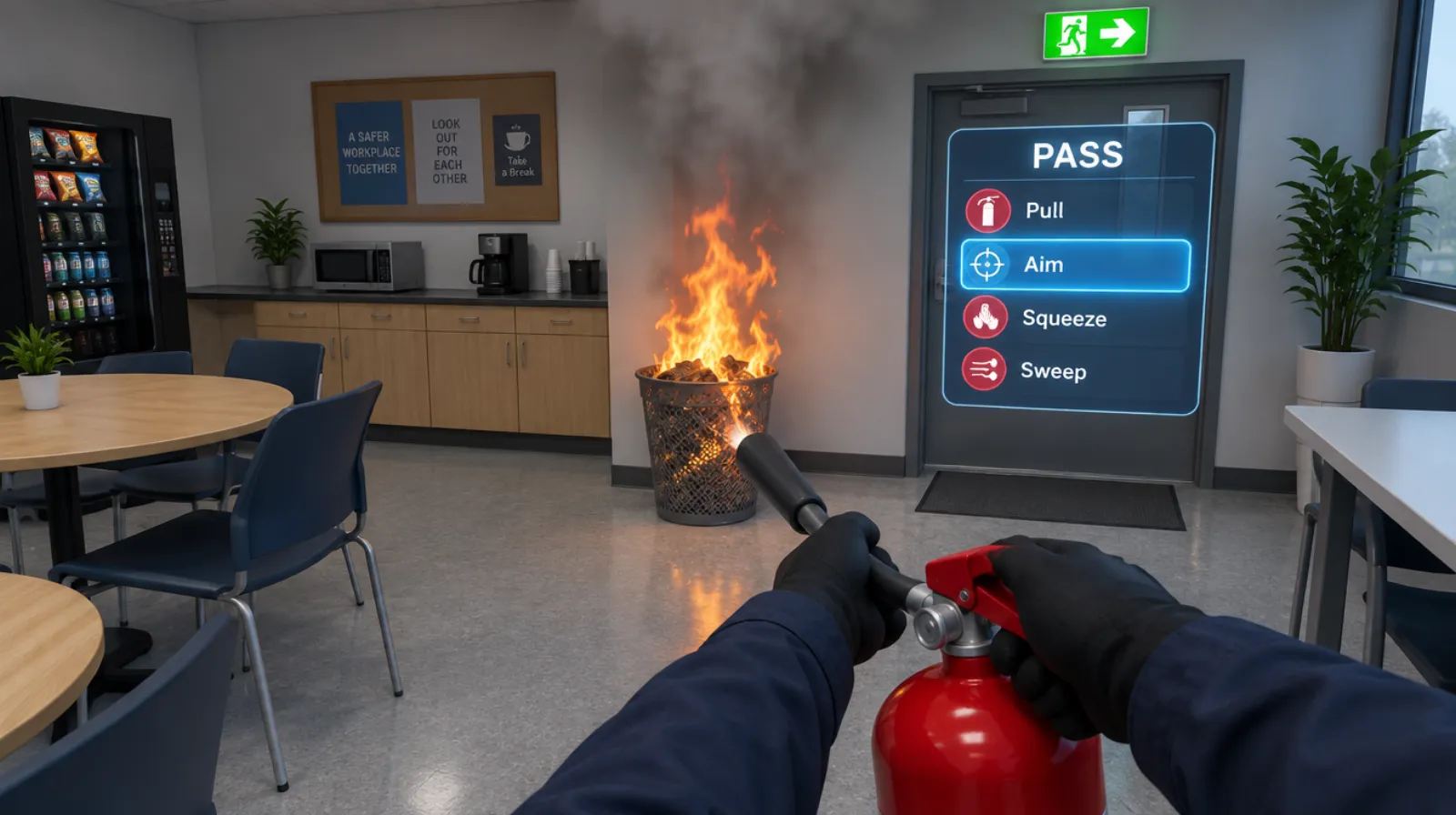
Learners find a fire, raise the alarm, decide whether it is safe to fight, choose the right extinguisher, and use the PASS technique. When the fire is too big, they evacuate by the right route to the assembly point.
- Every action, decision, and word recorded and analyzed
- Runs on Meta Quest headsets, managed from the Bubbler Hub
- Adapted to your procedures before rollout
Signs you need this
Signs your training needs more practice
Drills are walkthroughs
Evacuation drills show the route but never put anyone under pressure.
Nobody has used an extinguisher
Most staff have never pulled a pin or aimed a hose.
The wrong extinguisher gets grabbed
Fire classes and extinguisher types are taught once and forgotten.
People fight fires they should flee
Staff don’t know when a fire is too big to fight.
Assembly points are a mystery
In drills, people gather in the wrong place or go back inside.
What the module includes
5 chapters, in the order the work happens.
Learners can run the whole module or repeat a single chapter until they have it.
- 01
Raise the alarm
Pull the alarm, call for help, and alert the people around you.
- 02
Decide: fight or leave
Judge the size of the fire, your escape route, and whether it is safe to try.
- 03
Choose the extinguisher
Match the extinguisher to the class of fire.
- 04
Use PASS
Pull, aim, squeeze, and sweep, from a safe distance.
- 05
Evacuate
Shut off what you can, follow the route, and report at the assembly point.
What gets recorded
Every attempt, analyzed step by step.
- Alarm
- Time from finding the fire to raising the alarm.
- Decision
- Whether the learner fought or left, and whether that was the right call.
- Extinguisher
- Extinguisher chosen and PASS steps completed.
- Evacuation
- Route taken and arrival at the assembly point.
Built around your work
Your procedure, not a generic one.
- Your building, exits, and assembly points
- Your alarm and notification procedure
- The extinguishers and hazards on your site
- Roles such as fire wardens
Your subject-matter experts review the module before anyone trains on it.
- 01
Live view
Watch what the learner sees in the headset from a laptop or tablet, with the current task, step, and progress. The video stream isn’t stored; the session record is.
- 02
Session record
Every step taken or missed, in order and timed, plus the decisions the learner made and what they said.
- 03
Learner history
Every attempt for each person, so you can see what improved and what still needs another run.
- 04
Program dashboard
Completion across the group, the steps most people miss, and who needs another attempt or a conversation.
- 05
Reports and exports
Dated completion reports for each person, as PDF or data files, for training files, audits, and accreditation.
Not just another course
What changes when practice moves into a headset.
| Classroom or video | This module | |
|---|---|---|
| How people learn | Slides, video, or a demonstration | Doing each step themselves |
| Mistakes | Found later, on the job | Shown the moment they happen |
| Consistency | Depends on the trainer | Same scenario for everyone |
| Repetition | Limited by time, materials, and equipment | As many attempts as each person needs |
| Records | Sign-in sheet | Each step, decision, and attempt, by person |
Related modules
Often run together.
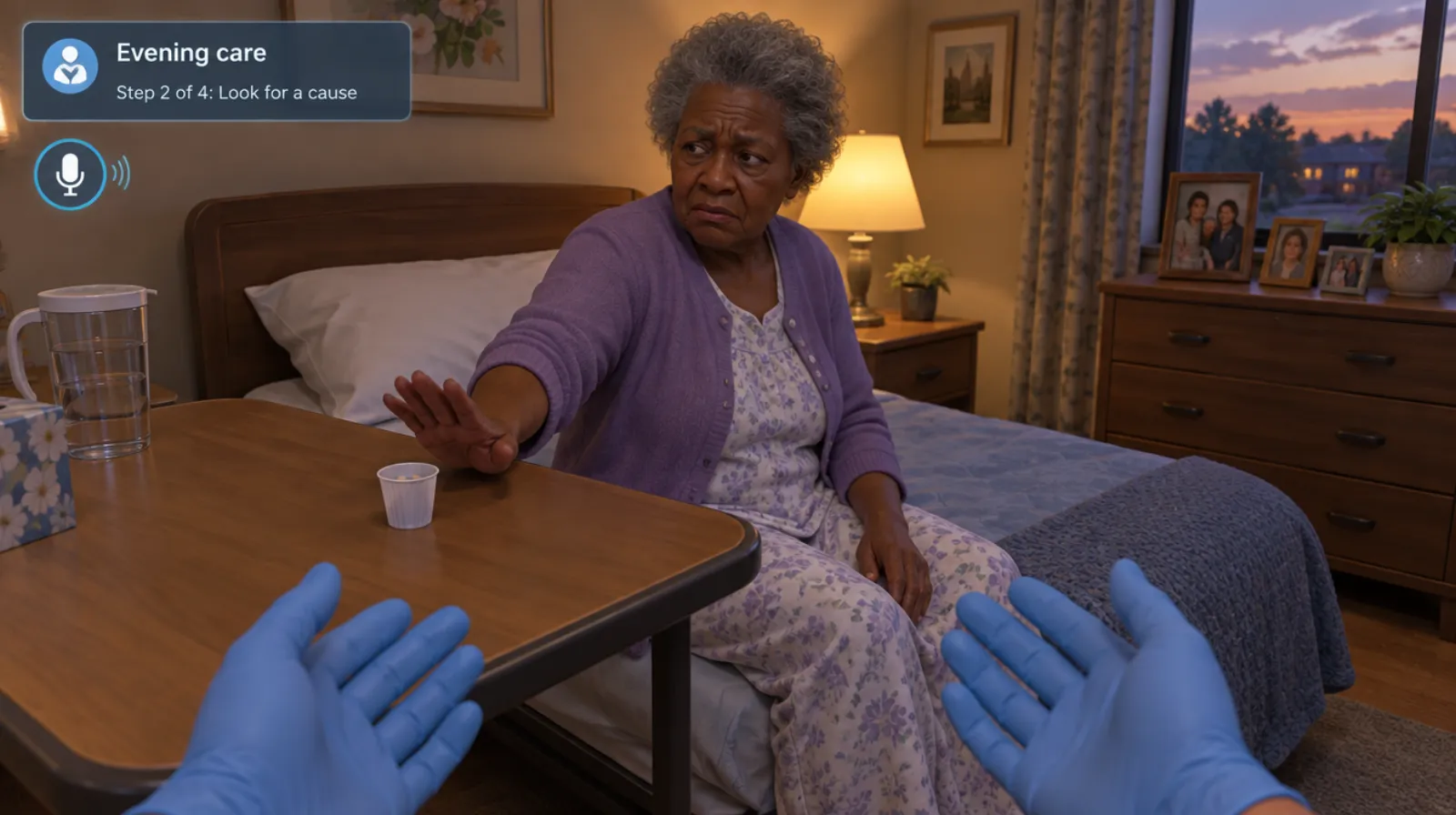
Dementia care
Agitation, care refusal, and late-day confusion in residents with dementia.
Read more →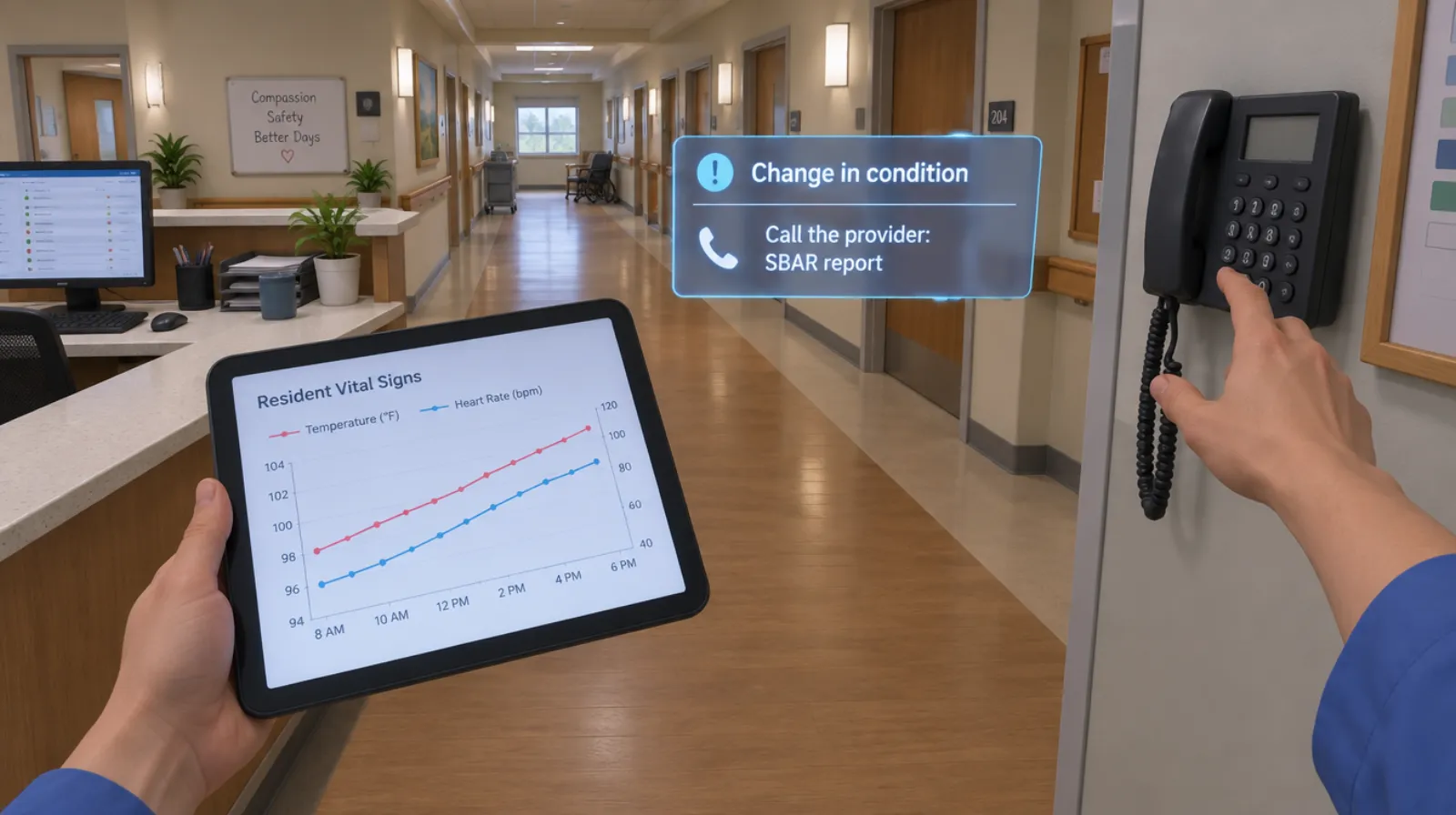
Change in condition and SBAR
Noticing that a resident or patient is different, and calling it in clearly.
Read more →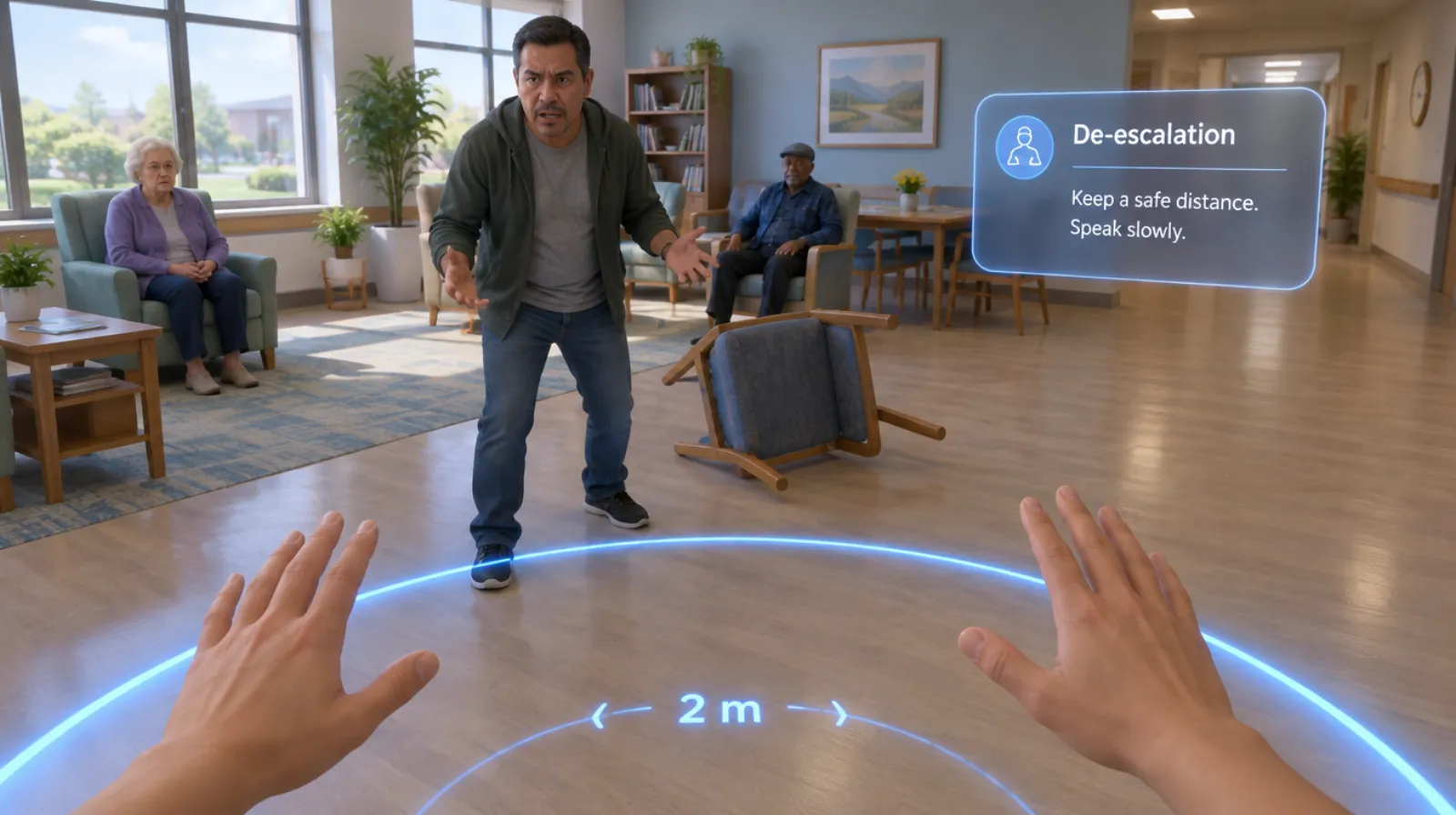
Behavioral health de-escalation
Keeping yourself and others safe when someone is in crisis.
Read more →Questions
About this module.
It supports your emergency action and fire prevention training with hands-on practice. Your written plans and drills stay in place.
See fire safety in a headset.
Book a demo and we’ll walk you through the module, show you what the records look like, and talk about adapting it to your team.